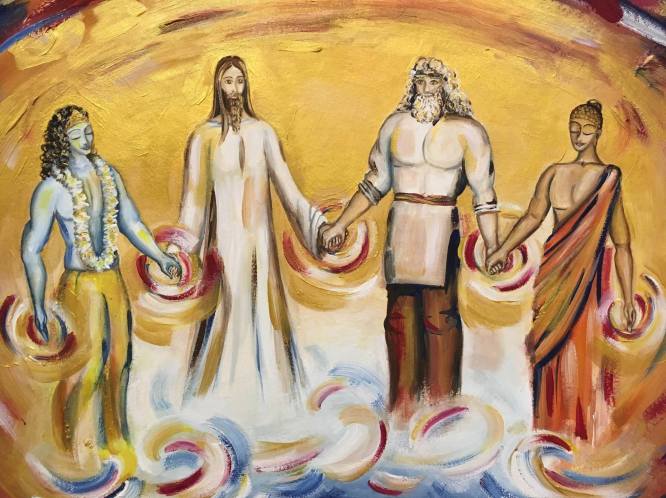
Existentialism Explained

What is the meaning of life? It is likely that you have asked yourself this question before, this is known as an existential crisis. A state in which you re-examine your life in the context of death and are impacted by the contemplation of the meaning, purpose, or value of life.

Existentialism is a philosophy that explores this problem of human existence, with an emphasis on the individual who starts in an apparently meaningless world, and who seeks to create meaning in a world without inherent meaning.

Existentialism is most commonly associated with several 19th and 20th century philosophers: Søren  Kierkegaard, Friedrich Nietzsche, Fyodor Dostoevsky, Martin Heidegger, Jean Paul Sartre, and Albert Camus.

However, many of these thinkers never used the term “existentialist” to describe themselves, some of them even rejected the label, while others accepted it. What they did share is a common template. Many of them regarded traditional systematic or academic philosophies too abstract and remote from concrete human experience and focused on the authenticity of the individual.

Danish philosopher Søren Kierkegaard is regarded as the father of existentialism, who along with Nietzsche, provided the basic foundations of 19th century Existentialism.

Nietzsche and Kierkegaard

Dostoevsky is a key figure as well, although he was a novelist more than a philosopher, he was one of the first to properly define key existentialist ideas. Walter Kaufmann declares: “it is as if Kierkegaard had stepped right out of Dostoevsky’s pen”.

Thus, Existentialism is not just about philosophy, but also combines together into novels, literature, and poetry. Notes from the Underground is one of the most important works of existentialist literature, where Dostoevsky attempts to justify the existence of individual freedom as a necessary part of humankind. He argues that the abstraction of ideologies has no basis in what one actually is and that makes a person live an inauthentic life.

One of Dostoevsky’s existential messages is that the purpose of life is to act properly by being authentic to yourself.

Fyodor Dostoevsky

Kierkegaard’s work focused on the individual as well, highlighting the importance of subjectivity, personal choice, and commitment. Although he was a Christian, he was very critical of Christendom, which was represented by the Danish Established Church, who made people live falsely religious lives.

People became so absorbed in the crowd that they became mere numbers of a herd. When religion is integrated into society, the social scene becomes the religious scene, and for that reason, religion had died.

Kierkegaard suggests that the only way out of existential angst is to take a leap of faith towards Christianity, emphasising a personal relationship with God, the subjective truth of the individual. It is the ultimate irrational experience, which is the most rational thing to do.

Nietzsche, on the other hand, was completely disillusioned with religion, announcing that God is Dead. He calls Christianity a slave morality, which resents the virtues of the powerful and promotes turning the other cheek. He wanted to create life affirming individuals, calling for a master morality, which does not intend to oppress others, but rather create new values and ways of life, through a Revaluation of All Values, giving way to the figure of the ubermensch, thus man becomes God.

Friedrich Nietzsche

It is interesting to see the profound doctrinal differences between the thinkers, even while sharing a common template. Dostoevsky and Kierkegaard were theistic thinkers, while Nietzsche was atheistic.

The term existentialism was actually coined in the mid-1940s by Christian Existentialist Gabriel Marcel, who focused on the modern individual’s struggle in a technologically dehumanising society.

Gabriel Marcel, coined Existentialism

Marcel later came to reject the label he himself had coined, to dissociate himself from figures such as fellow French Existentialist Jean Paul Sartre, preferring the term Christian Socratic in honour of Kierkegaard’s work with Socratic irony.

Sartre adopted the existentialist label and greatly helped popularise existentialist thought. He proposes the famous maxim: “existence precedes essence”.

Jean Paul Sartre

Ancient Greek philosophers Plato and Aristotle believed that essence precedes existence. Every human being is born with an essence, that is what gives us the properties of being a human being. This is known as Essentialism.

Sartre flips this around and tells us that we are a blank canvas, that we create and make ourselves through what we do, and thus existence precedes essence. In this way, our life is a work of art. However, this freedom also becomes a slightly horrifying realisation:

“Man is condemned to be free; because once thrown into the world, he is responsible for everything he does.”

Martin Heidegger is another important existentialist who talks about the idea of “thrownness”, that we are all thrown into the world, arbitrarily born into a given family, within a given culture and at a given moment in human history, these “givens” are facticities.

The task we decide to be constantly engaged in and care about have very little to do with us, they are sort of decided for us by the particular facticity that we were born into. We are thrown with neither prior knowledge nor individual opinion into a world that was there before and will remain there after we are gone.

Sartre would tell us that “freedom is what you do with what’s been done to you.” He was very influenced by Heidegger’s masterpiece Being and Time, publishing his own book titled Being and Nothingness. However, Heidegger distances himself from Sartre’s existentialism due to major differences in their ideas.

Martin Heidegger

Once you realise that you are completely free, the responsibility that follows and the infinite possibilities that are open to you, creates a sort of dread.

It leads many people to adopt what Sartre calls Bad Faith, a way of denying the fundamental nature of our freedom and responsibility and accepting something as true, that might not be convincing, but that is convenient and easy for us to believe in.

He gives the example of a waiter who does not enjoy his job but goes to work every day and assumes the roles of a waiter, without feeling fulfilled. And when he thinks of applying to a different job, and all the difficult questions that would come along with that sort of life choice, he convinces himself that it’d be better to just remain a waiter.

This is similar to Kierkegaard’s idea that “anxiety is the dizziness of freedom”.

One may possess the ability to freely act, but if one never uses it and thinks about an endless sea of possibilities, one is effectively not capable of freely acting. One gets lost in the “infinite”, as Kierkegaard puts it, and lives a totally unimaginative everyday life.

Infinite sea of possibilities

The other part is getting lost in the “finite”. That is, not considering enough possibilities and just mindlessly going around the demands of culture and social expectations. People live a complete lie; they live because of what everyone tells them that’s what one does. This can be a scary realisation as most people are not aware of this, they see everything they do as their own choice.

Similarly, Heidegger tells us that inauthenticity occurs when we embody only our facticity (the reality we have been thrown into) and our fallenness (falling into tasks that other people tell us to do). One becomes Das Man “The-they”, surrendering one’s existence to a formless entity, instead of choosing to do something that we want, we do it because “that is what they do”.

Das Man “the-they”

Albert Camus was an acquaintance of Sartre. However, the disagreements between them emerged quickly and they eventually split. Camus is considered to be an existentialist, even though he firmly rejected the term throughout his life. He contributed to the rise of the philosophy known as Absurdism.

Camus describes the Absurd as:

“the conflict between the human tendency to seek inherent value and meaning in life, and the human inability to find any meaning in a purposeless, meaningless or chaotic and irrational universe”.

Man seeks for meaning, only to receive the “unreasonable silence” of the universe in response.

Camus states: “I do not believe in God and I am not an atheist.” This reflects the notion of the Absurd. The search of the possibility of the existence of God is humanly impossible, but this also entails that the proof that God does not exist is impossible too.

Albert Camus

The Myth of Sisyphus is a fierce expression of the Absurd. Sisyphus is the absurd hero condemned to a lifetime of rolling a large boulder up a hill, only to reach the top and have the boulder roll back down to the bottom for him to start all over again, for eternity.

The Myth of Sisyphus

This incredibly vivid imagery is an allegory of the human condition, of our futile search for meaning in an indifferent and meaningless universe, while working on the same mundane tasks, we all have to push our own boulders, only to watch it roll back down.

Although all this only scratches the surface of existentialism, it can serve as a guide to explore its diverse thinkers, with core ideas such as authenticity, individuality, subjectivity, freedom and responsibility, in order to understand and pursue the meaning of your life.


Sign up with your e-mail to get a notification of the latest posts!


Existentialism in 10 Minutes

Existentialism is a philosophy that explores the problem of human existence, with an emphasis on the individual who starts in an apparently meaningless world, and who seeks to create meaning in a world without inherent meaning.


Support Eternalised


Buy Official Merch

“A room without books is like a body without a soul.” — Cicero

Discord Community

Follow Eternalised on social media!

Introduction to Jacques Lacan

Jacques Lacan was a French psychoanalyst and psychiatrist sometimes referred to as “the French Freud” and is regarded as an important figure in the history of psychoanalysis. The Imaginary, the Symbolic, the Real and the Mirror Stage are some of Lacan’s most notable ideas.

His teachings explore the significance of Freud’s discovery of the unconscious, proposing a “return to Freud”.

Lacan exerted his influence primarily through his yearly seminars in Paris, with a total of 27 seminars completed during his lifetime.

Lacan founded his own analytic organisation after being rejected by the conventional institutions. His magnum opus is the nine-hundred-page tome Écrits or “writings”, which gather many of Lacan’s most important ideas as well as condensed versions of the annual seminars. The book elevated Lacan into his fame as the French Freud.

However, the best way to start with Lacan is through his seminars. His vision recovers in Freud the intimate relationship between the unconscious and the ego. For Lacan, the ego is an object rather than a subject.

The portrait of the ego-as-object is at the heart of Lacan’s lifelong critical polemics against Anglo-American ego psychology. For Lacan, their error is that they pretend to explain human behaviour through the desire and rationality of an autonomous ego. However, the ego is nothing more than an epiphenomenon (a secondary effect), that far from managing desire, is a mere product of it.

We desire things to become a more fulfilled self, however, we can never truly be ourselves, as our desire is never quenched.

Lacan & Language

Language

One of Lacan’s most famous statements is: “the unconscious is structured like a language”. Lacan’s notion of language is influenced by Ferdinand de Saussure’s linguistic structuralism.

In semiotics (the study of signs), a sign has two aspects: signifier and signified. These two are completely psychological and do not represent material concepts.

The signifier is the symbol, sound, or image that represents an underlying concept or meaning. For example, an apple. The signified is the concept of the thing, in this case – a specific fruit.

Aspects of a Sign

It is possible to have words that have no signified (like a specific fruit) or to have concepts that have no signifiers (like the word apple).

Lacan famously said that: “the signifier represents a subject for another signifier”.

The unconscious is structured like “language” in the sense of the different relation of signifiers to each other. The distinction that Saussure made between language and speech reflects for Lacan the distinction between the unconscious and the ego.

Lacan tells us that the psyche is composed of three stages, or what he calls “registers”: the imaginary, the symbolic and the Real.

Borromean Knot of the Three Registers

These three form the skeletal framework for most of Lacan’s intellectual life. The registers do not have a linear stage of development, but rather a mutual dependence on one another.

Before starting with the imaginary stage, the very first significant stage in human development is the “mirror stage”.

The Mirror Stage

Baby seeing his mirror self

As infants, we dependent on our parents for protection and food. Our inability to physically do the necessary bodily needs to satisfy our necessities produces frustration and anxiety.

The feeling of impotence, especially between 6 and 18 months of life, makes the child experience their body as fragmented.

During this time, infants have their first experience of seeing their own reflection in a mirror, Lacan calls this the “specular image” from which the ego-as-object emerges. The child is fascinated by this “other self” because he sees there his body as integrated and projects a unified ego as something distinct from what he is. He sees in it the possibility of overcoming his fragmented condition to become a whole self.

Through the identification with an idealised image, the infant enters a lifelong quest to achieve this Ideal-I, however, this quest can never be fulfilled, as we can never be ourselves. This split is the root cause that gives way to alienation, anxiety, and neurosis.

The role of the “other” (the image in the mirror) undermines the idea of an autonomous self that develops and relates to others.

The loss of autonomy upon becoming aware that one is a visible object is linked to the “Gaze”, which is the anxious state of mind that comes with the self-awareness that one can be seen and looked at.

Other people can also be said to “mirror” back to one an “image” of oneself, a sense of how one “appears” from other perspectives.

The parent’s encouragements to the child to recognise himself in the mirror gives way to what Lacan calls méconnaissance or “misrecognition”. Which continues throughout life for all experiences of “recognising” oneself as being a particular kind of I.

The ego becomes a repository for the projected desires and fantasies of larger “others”; the child’s image being overflowed by signifiers flowing from other speaking beings.

Recognising the ego as embodying and representing an authentic and unique selfhood that is most genuinely one’s self, is tantamount to misrecognising that, at root, the ego isultimately made of alienating unconsciously adopted ideas or attitudes of others, through which one is seduced and subjected to.

Lacan calls the ego “the desire of the Other” (qua others’ conscious and unconscious wants and machinations). Thus, Lacan declares that “the self is the other”, that is, the self is what it is because of your relationship with the other.

1. The Imaginary

Imaginary as in image-based

The mirror stage is tied with the Imaginary order, which is the first encounter of the self with the world where due to the lack of language and signifiers, the infantile cognition is based on the visual field, it is image based.

In broader terms, it is concerned with who and what one “imagines” other people to be, what one “imagines” when communicating with others, and what one “imagines” oneself to be, including from the imagined perspectives of others.

The Imaginary is central to Lacan’s conception of ego-formation, as experienced in the mirror stage. It is an intrinsic, unavoidable dimension of one’s existence, and it is neither possible nor desirable to eliminate the illusions of the Imaginary.

In other words, it is a host of intra-subject and intersubjective relationships which are imagined and internalised.

The fictional abstractions of the Imaginary, far from being merely “unreal” as ineffective, inconsequential epiphenomena, are integral to and have very concrete effects upon actual, factual human realities.

2. The Symbolic

The Symbolic

Lacan emphasises the dependence of the Imaginary on the Symbolic. This dependency means that we are shaped and determined by socio-linguistic structures and dynamics.

The Symbolic is theorised on the basis of resources provided by structuralism, particularly Saussure. It refers to the laws, customs, norms, institutions, rituals, and traditions that structure the socio-cultural environment that one inhabits. Lacan calls this the “symbolic order” or “the big Other”, all of these things being entwined as networks of interlinked signifiers that depicts the analytic unconscious (qua “structured like a language”).

An individual human being is thrown at birth (along the lines of Heideggerian Thrownness), to this non-natural universe, a pre-existing order preparing places for us in advance.

We essentially are who we are, because of the socio-cultural and linguistic environment, represented by the Symbolic.

To interpret the desire of the unconscious, one must refer to a world beyond the imaginary, where nature reigns, to the symbolic world of culture with all its norms and institutions.

3. The Real

The Real

Lacan conceives of the Real as bound up with both of the other two registers. It is the core of the triad. The Imaginary and the Symbolic when taken together as mutually integrated, constitute the field of “reality”, itself contrasted with the persistence of the Real, which is radically un-representable and beyond existence.

The Real is intrinsically elusive, resisting by nature capture in the comprehensibly meaningful formulations. It is, as Lacan stresses, an “impossibility” vis-à-vis reality.

It is what we spend the whole of our lives unaware of and at the same time, is what enables us to function properly. It is also the reason that much that we do cannot be explained. In other words, it is something that we can never know that has an effect on what we do, especially our anxieties and neuroses.

The Real can be experienced when our reality is ruptured, where everything that we find meaningful in life is torn apart, and we gaze at the terrifying void of existence, as experienced in traumatic events.

Towards the end of his life, Lacan adds a fourth register – the sinthome or symptom, which is what binds everything together.

While the Real cannot be cured, the main purpose of Lacanian psychoanalysis is to dismantle the specular image, which begins in the mirror stage, loosening its narcissistic fixation on itself, to recognise our fundamental relationship with the other, which is ultimately, what we really are.


Sign up with your e-mail to get a notification of the latest posts!


Jacques Lacan in 10 Minutes

Jacques Lacan was a French psychoanalyst and psychiatrist sometimes referred to as “the French Freud” and is regarded as an important figure in the history of psychoanalysis. The Imaginary, the Symbolic, the Real and the Mirror Stage are some of Lacan’s most notable ideas.


Support Eternalised


Buy Official Merch

“A room without books is like a body without a soul.” — Cicero

Discord Community

Follow Eternalised on social media!

The Turn, Technology & The Last God – Heidegger

After Heidegger’s masterpiece Being and Time there is a reorienting shift in Heidegger’s philosophy known as “die Kehre” or “the turn”, he links this to his own failure to produce the missing divisions of Being and Time, as the book remained unfinished.

He also distances his view from Jean Paul Sartre’s existentialism, particularly his Being and Nothingness which retakes the Husserlian and Cartesian point of view of objects and subjects, and he starts to shift his focus to poetry, language and technology.

His later thinking is encapsulated in his Contributions to Philosophy, written in a very poetic style. He famously said that “language speaks.”

Heidegger’s writing shifts to understanding Being historically and Being in language. He had been talking about the modern epoch without realising that each epoch has a different way of understanding of what it is to be. This forges a pathway to a new kind of thinking.

He moves from temporality as Dasein’s distinctive mode of Being to Being consisting most fundamentally in what he calls dwelling.

Human beings dwell in that they stay on earth, under the sky, before the divinities, and among one another as mortals. The underlying unity of these are known as the “simple oneness of the four”, he calls it the fourfold.

In dwelling, then, Dasein is located within a set of sense-making practices and structures with which it is familiar. It is a rethinking of Being in terms of the notion of “ereignis”, translated as “event” or “appropriation”.

The question now becomes not ‘What is the meaning of Being?’ but rather ‘How does Being essentially unfold?’.

We are now asking the question of Being not from the perspective of Dasein, but from the perspective of Being. Dasein is now appropriated by being and man owned by being.

Technology

Technology

The later Heidegger was concerned that in our modern society, we are so immersed in technology that we disconnect ourselves from being, from the world and nature.

Technology was a topic that highly interested Heidegger, in The Question Concerning Technology he tries to explore the essence of technology. Heidegger’s main interest is its fundamental impact on Being, he describes a technological mode of Being. Technology has thoroughly moulded society as a whole, not as a neutral force, but as way of understanding Dasein.

He thinks a large part of modern society’s anxiety is because of a technological and nihilistic understanding of Being. He was not against technology, he simply tried to understand the nature of it and warn us against the potential danger it can have to human existence.

The focal point of our Being-in-the-world is going unnoticed because of the repetitive and trite daily realities of our existence with resources being exploited as a means to an end.

“The circularity of consumption for the sake of consumption is the sole procedure which distinctively characterises the history of a world which has become an unworld.”

Only a God can Save Us

The Gods

The later Heidegger also introduces the concept of “the last god” and famously announces that only a god can save us.

“The last god is not the end but the other beginning of immeasurable possibilities for our history.”

Heidegger has in mind not a religious intervention in an “ordinary” sense of the divine, but rather a transformational event in which a secularised sense of the sacred is restored.

It is a sort of transformational cultural event that is seen as “divinity.” He argued that we are waiting for a god who will reawaken us to the poetic, and thereby enable us to dwell in the fourfold. This task certainly seems to be a noble one. Unfortunately, it plunges us into the most controversial region of Heideggerian philosophy, his infamous involvement with Nazism.

Controversy

Martin Heidegger Portrait

It is quite strange how someone who could author Being and Time and become one of the greatest philosophers of the 20th century, could also be into Nazism.

Heidegger’s understanding of traditional German rural life as realising values and meanings that may counteract the insidious effects of contemporary technology is tied with the national socialist image of rustic German communities, rooted in German soil, proving a bulwark against foreign influence.

Commentators describe Heidegger wandering into National Socialism because he believed that the German people were destined to carry out a monumental spiritual mission and that his philosophy could contribute to the whole nation.

After the war, he had stated that his participation in the movement had been “the biggest stupidity of his life”.

And yet Heidegger never really truly took responsibility and apologised for his past actions.

Despite this, what we really need to focus on are his ideas – it is through these ideas that we can be critically engaged with his sustained investigation into Being, to think deeply about human life and appreciate his massive contribution to human thought.


Sign up with your e-mail to get a notification of the latest posts!


Greatest Philosophers in History | Martin Heidegger

This video explores Heidegger’s key terms as an introduction to his philosophy. Most importantly: Being-in-the-world, ready to hand and present-at hand, facticity, thrownness, existentiality, fallenness, Das Man, temporality, being-toward-death and the fourfold.


Support Eternalised


Buy Official Merch

“A room without books is like a body without a soul.” — Cicero

Discord Community

Follow Eternalised on social media!

Temporality – Heidegger

The second most important feature of Being and Time, apart from Being is, Time. Heidegger calls it “temporality.” Dasein is time, we are embodied time. We go from being-in-the-world to care to temporality.

Temporality is the ultimate meaning of being-in-the-world and care. The anticipation of death is the ultimate source of meaning of temporality.

Heidegger describes time as openness or unclosedness, it is being present to things not passively, but actively making sense of them.

One of the features of inauthenticity is failing to actualise one’s Being. Heidegger stresses a form of being that is “ecstatically”, rather than passively, oriented toward its own possibilities.

With the concept of historicity Heidegger indicates that Dasein always “temporalises” or acts in time, as part of a larger social and historical collectivity, as part of a people.

Dasein possesses a heritage on which it must act. Historicity means making a decision about how to actualise important elements of a collective past. In other words, history is not a passive force devoid of intentionality – but rather a project that humans consciously and authentically undertake in order to respond to their collective past for the sake of their future.

Being needs to be understood as fundamentally a timebound, historical process. Thus, we are not just temporal beings, but authentically historical beings, belonging not only to ourselves but also to our ancestors, community, and species.


Sign up with your e-mail to get a notification of the latest posts!


Greatest Philosophers in History | Martin Heidegger

This video explores Heidegger’s key terms as an introduction to his philosophy. Most importantly: Being-in-the-world, ready to hand and present-at hand, facticity, thrownness, existentiality, fallenness, Das Man, temporality, being-toward-death and the fourfold.


Support Eternalised


Buy Official Merch

“A room without books is like a body without a soul.” — Cicero

Discord Community

Follow Eternalised on social media!

Authenticity, Inauthenticity and Being-toward-death – Heidegger

When we realise how Heidegger’s care structure affects our behaviour, the relationship of meaningfulness with respect to things, people and to ourselves create the possibility for two modes of Being: authenticity or inauthenticity.

Inauthenticity occurs when a person embodies only their facticity (the reality they have been thrown into) and their fallenness (falling into tasks that other people tell them to do). They live as Das Man, without ever considering the possibilities at their disposal about other ways of living life, their existentiality.

The experience of inauthenticity creates dread and anxiety. One moves right to the frontier between nothingness, absurdity, death and making sense.

For Heidegger, the experience of this thin line that separates us from nothingness, throws us back into the sense-making world, now with the awareness that there is no ground under our feet, that we are doing this alone.

Heidegger walks us through a phenomenological analysis of our whole world, everything that gives meaning to us, fall apart.

We need to develop authenticity. A lifelong process of radically considering the possibilities at our disposal, to understand our facticity and be immersed in it, embracing it, including what Heidegger calls our “historicity” (the cultural and historical context with their rituals and traditions), to be introspective about our fallenness and to avoid the trap of Das Man and become Dasein.

It is to be responsible to one’s whole human nature, to have accepted oneself as thrown, finite and mortal. Authenticity can come into existence when we arrive at the realisation of who we are and grasp the fact that each human being is a distinctive entity.

Being-toward-death

Out of this authenticity comes the idea of Being-toward-Death. The ultimate possibility and inevitability that we all have to deal with is death. This is not a fatalistic orientation that brings Dasein closer to its end, in terms of clinical death, but is rather a way of being.

It is too easy to get lost in the everyday, until we face death and start thinking about who we truly were, ironically, for the first time we actually live for ourselves, without spending time thinking about the approval of other people on who we are.

When asked how we might recover authenticity, Heidegger replied that we should simply “spend more time in graveyards.”

To live authentically, is to recognise the inevitability of death in the context of our everyday living, so as to live life to the fullest. This is Being-toward-Death. 


Sign up with your e-mail to get a notification of the latest posts!


Greatest Philosophers in History | Martin Heidegger

This video explores Heidegger’s key terms as an introduction to his philosophy. Most importantly: Being-in-the-world, ready to hand and present-at hand, facticity, thrownness, existentiality, fallenness, Das Man, temporality, being-toward-death and the fourfold.


Support Eternalised


Buy Official Merch

“A room without books is like a body without a soul.” — Cicero

Discord Community

Follow Eternalised on social media!

Facticity, Existentiality, Fallenness – Heidegger

The things we care about is a central focus in Heidegger’s philosophy. There are three fundamental terms for the care structure of Dasein: facticity, existentiality and fallenness.

1. Facticity

Thrownness

Facticity is a part of what he calls “Geworfenheit” or “thrownness”. We are all thrown or projected into the world, arbitrarily born into a given family, within a given culture and at a given moment in human history, these “givens” are facticities.

The task we decide to be constantly engaged in and care about have very little to do with us, they are sort of decided for us by the particular facticity that we were born into.

We are thrown with neither prior knowledge nor individual opinion into a world that was there before and will remain there after we are gone.

2. Existentiality

Existentiality

The second term is existentiality, the possibilities that we have at our disposal. The reality of  being a Dasein is to be a being that has possibilities, and that is what distinguishes us from every other being, that is why we are part of Dasein.

To describe existentiality we must distinguish between two key terms: Existentiell and existential. These sound almost identical but are written differently and mean very different things for Heidegger.

The first one, “existentiell” refers to the aspects of the world which are identifiable as particular delimited questions or issues, whereas “existential” refers to Being as such, which permeates all things and cannot be delimited in such a way as to be susceptible to factual knowledge. In general it can be said that “existentiell” refers to a “what”, a materially describable reality, whereas “existential” refers to structures inherent in any possible world.

In other words, the term “existentiell” refers to an ontic determination (physical, real, or factual existence), whereas “existential” refers to an ontological determination (dealing with the nature of being).

These two are related as an ontic determination is inherently ontological.

3. Fallenness

The final term that Heidegger uses is “fallenness”. It refers to the inauthentic existence of Dasein. As human beings, we fall into certain tasks by default. Because of social expectations and people telling us how we should be behaving, making us fall into a herd mentality. We have all fallen into tasks as it is part of our nature.

Das Man

Heidegger calls the behaviour of mindlessly following other people the Das Man, translated as “they-self” or “the-they”, which is the opposite of the authenticity of Dasein and Being-in-the-world.

It is a mode of existence of Being-with-one-another. We surrender our existence to a formless entity. Instead of truly choosing to do something that we want, we do it because “that is what one does” or “that is what they do”.

We become mere numbers in the crowd, and live inauthentic lives. Heidegger contrasts this inauthentic Das Man with the authentic Dasein, or “owned self”.


Sign up with your e-mail to get a notification of the latest posts!


Greatest Philosophers in History | Martin Heidegger

This video explores Heidegger’s key terms as an introduction to his philosophy. Most importantly: Being-in-the-world, ready to hand and present-at hand, facticity, thrownness, existentiality, fallenness, Das Man, temporality, being-toward-death and the fourfold.


Support Eternalised


Buy Official Merch

“A room without books is like a body without a soul.” — Cicero

Discord Community

Follow Eternalised on social media!

Ready-to-hand and present-at-hand – Heidegger

Two of Heidegger’s most basic neologisms, present-at-hand and ready-to-hand, are used to describe various attitudes toward things in the world. We are constantly surrounded by “equipment” as stuff we can work with in a “context of significance”.

For Heidegger, most of the time we are involved in the world in an ordinary way or “ready-to-hand.” We are usually doing things with a view to achieving something. The being of the ready-to-hand announces itself as a field of equipment to be put to use.

Heidegger gives the example of a hammer. When we look at a hammer, our initial reaction is not to deconstruct it and break it down into what it is made of. We simply look at it as equipment to carry out tasks.

Ready-to-hand equipment

Let’s say an expert carpenter is hammering nails, after some time he’ll eventually start to forget about the existence of the hammer and can talk to his fellow carpenters or have his thoughts wander elsewhere, without necessarily being a subject contemplating the hammer (an object). The activity becomes a blur and reveals his surroundings. And by revealing one thing, one necessarily conceals and devalues another.

This is Heidegger’s crucial discovery, when look at our ready-to-hand relation to things, we just don’t find subjects contemplating objects.

However, what if the head flies off the hammer? It would immediately lose its usefulness and appear as merely “there”. Heidegger calls this being of an object “present-at-hand”. It happens when we regard an object in isolation and study it with an attitude like that of a scientist, of merely looking at the object’s bare facts as they are present.

This is not usually the way we see things in the world as. When a hammer breaks, it loses its usefulness and becomes present-at-hand. However, it also soon loses this mode of being present-at-hand and becomes something that must be replaced or repaired. In this case its Being may be seen as unreadiness-to-hand.

The ready-to-hand and present-at-hand levels represent the fundamental structure of Dasein’s being-in-the-world, with the more fundamental of the two, readiness-to-hand, being organised and arranged through Dasein’s care.

Heidegger wants us to discover the blurry areas of existence without the layers of perception that hinders experiencing the world fully.


Sign up with your e-mail to get a notification of the latest posts!


Greatest Philosophers in History | Martin Heidegger

This video explores Heidegger’s key terms as an introduction to his philosophy. Most importantly: Being-in-the-world, ready to hand and present-at hand, facticity, thrownness, existentiality, fallenness, Das Man, temporality, being-toward-death and the fourfold.


Support Eternalised


Buy Official Merch

“A room without books is like a body without a soul.” — Cicero

Discord Community

Follow Eternalised on social media!

Dasein and Being-in-the-world – Heidegger

The fundamental concept of Being and Time (Heidegger’s magnum opus) is the idea of Da-sein or “being-there”, which simply means existence, it is the experience of the human being.

The world is full of beings, but human beings are the only ones who care about what it means to be themselves.

“A human being is the entity which in its Being has this very Being as an issue.”

Dasein and human beings are interrelated, without one another, there is no being and no meaning. Existence only exists within our being, and the reality without our being is irrelevant.

If a volcano were to erupt without us being there, would it actually have happened? Heidegger would tell us that it would simply be irrelevant.

“We are ourselves the entities to be analysed.”

Dasein is what is common to all of us, and it is what makes us entities.

Dasein is then not a disembodied, transcendent being, but rather the experience of being that is peculiar to human beings, an inherently social being that already operates with a pre-theoretical grasp of the a priori structures that make possible particular modes of Being.

Heidegger stresses it to be pre-theoretical because a theoretical structure would prevent us from seeing things as they are in themselves. This perspective can then allow things to show as they are in themselves and not through some kind of lens.

Being-in-the-world

Being-in-the-world

He associates Dasein as “Being-in-the-world”, they are often used hand-in-hand. Being-in-the-world is an existential concept that emphasises human existence as a state of living with a highly meaningful orientation. Each individual has a unique destiny to fulfil in this world.

This is an essential characteristic of Dasein. It is defined as an a-priori structure being “grounded” in the state of Being.

Being-in-the-world is Heidegger’s replacement for terms such as object, subject, consciousness, and world.

As mentioned before, Dasein is not a Being that can be observed, how can we then understand it? Heidegger would tell us to study beings, and especially what it is like to be a human being.

We need to look at what is unique about our situation as human beings. But what makes Dasein different from all other beings: rocks, plants, and animals?

To answer this, we must look into the various features of Dasein. These features always remain the same regardless of what time period it is in the world: whether its 1000 B.C. or the 21st century.

Feature 1. Being as an issue

The first feature of Dasein is that it is a “being as an issue for it”. It takes its own being as an issue; for it is ontological being. In other words, it asks questions about its own existence, it is always confronted with the question “what shall I be today, tomorrow or next year?”.

And these questions are to be answered by oneself, he calls it “mineness”. We have no other way of experiencing ourselves or the world as being in any other mode than our own existence.

Feature 2. Care

The second feature is “care or concern”. We not only find ourselves in the world, but we care about it as Being-in-the-world. Heidegger uses the word “care” as a technical term which has to do with our engagement with the world for various purposes.

Things are meaningful by themselves; meaning is not an add-on to existence, but rather the definition of existence. In other words, we are embedded in meaning, and there is no exit from making sense of one’s life.

To be a Dasein is to always be doing something and pointing towards something, to be a being that is constantly engaged in doing tasks that we care about. Therefore, the essence of Dasein is its existence. We are instantly turned into the structures of everydayness and being-in the-world.

What is important is that Dasein is its possibilities, it needs some context within which to work these out. In our case, as the beings that are being analysed, that context is the kind of world we find ourselves in.

Heidegger concludes that “care” is the primordial state of Being as Dasein strives towards authenticity.


Sign up with your e-mail to get a notification of the latest posts!


Greatest Philosophers in History | Martin Heidegger

This video explores Heidegger’s key terms as an introduction to his philosophy. Most importantly: Being-in-the-world, ready to hand and present-at hand, facticity, thrownness, existentiality, fallenness, Das Man, temporality, being-toward-death and the fourfold.


Support Eternalised


Buy Official Merch

“A room without books is like a body without a soul.” — Cicero

Discord Community

Follow Eternalised on social media!

Introduction to Martin Heidegger

Martin Heidegger is known as one of the most influential philosophers of the 20th century. Born in Germany in 1889, he is best known for his work in existentialism and phenomenology. Heidegger was influenced at an early age by the Greeks. Aristotle’s Metaphysics which talks about what it is that unites all possible modes of Being, is in many ways, the question that ignites and drives Heidegger’s philosophy.

The most fundamental philosophical question is: “Why does anything exist at all?” Or as Heidegger puts it, “what does it mean to be?”

He was fascinated by the Greeks and spend considerable time reflecting on ancient Greek thought. Heidegger’s thought is a sort of authentic retrieval of the past. He revived the question of Being, which had been largely forgotten by the metaphysical tradition existing from Plato to Descartes. This is why he is also considered as a hermeneut, as he played around with language whilst reinterpreting various philosophical texts.

Plato and Aristotle

William Dilthey who stressed the role of interpretation and history in the study of human activity profoundly influenced Heidegger.

Heidegger also studied the giants of existentialism Kierkegaard and Nietzsche, and most importantly had been a student of Edmund Husserl, the founder of phenomenology.

Edmund Husserl

Phenomenology is the philosophical study of structures of consciousness as experienced from the first-person point of view. In other words, phenomenologists try to understand the phenomena that surrounds our lives, knowing that we live in a self-defined perceptual world.

Husserlian phenomenology proposes intentionality, which is the characteristic of consciousness whereby it is conscious of something. In other words, it’s directedness toward an object. Seeing man’s situation as that of a subject confronted by objects.

Heidegger began his existentialist philosophy with a profound rejection of this Cartesian dualism regarding object and subject and the distinction between mind and body, which can be traced back to rationalist thinker Descartes, who arrives at one single first principle of human existence: I think. Thought cannot be separated from me; therefore, I exist.

René Descartes

This makes up his famous philosophical statement: “I think, therefore I am”, separating subject from object, mind from body.

However, this self-conscious reflection does not exhaust our being. Heidegger says that before you think, you have to be.

In fact, most of the time we’re just busy getting “stuff” done. It’s this feature of us that Heidegger pays special attention to, the “everydayness” of human existence.

Prior to being a rational animal or a brain, we are firstly just Being. Heidegger tries to capture this Being before it is humanly defined.

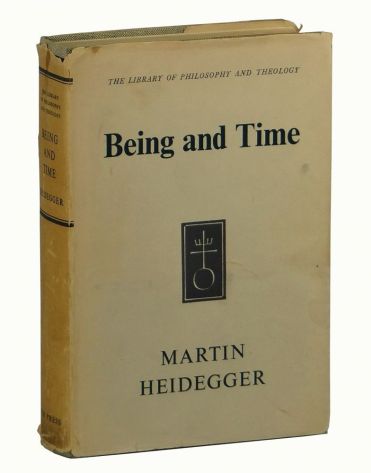
Being and Time

Heidegger’s masterpiece Being and Time

His early work as a phenomenologist and university professor culminated in his masterpiece and one of the most significant works of contemporary European philosophy: Sein und Zeit (Being and Time).

It is a long and complex book. Many readers initially encounter its strange and peculiar vocabulary. However, he does use it rigorously and economically, so one gets used to his language. Heidegger’s intention is to reveal the hidden meanings of ordinary talk.

The depth of this work intended a profound change of direction for philosophy. Such was the depth of change that Heidegger found it necessary to introduce a large number of neologisms, often connected to idiomatic words and phrases in the German language.

In subsequent posts, we will be exploring the main ideas of his fascinating philosophy:

  1. Dasein and Being-in-the-world
  2. Ready-to-hand and present-at-hand
  3. Care structure (facticity and “thrownness”, existentiality and fallenness)
  4. Authenticity and inauthenticity and Being-toward-death
  5. Temporality
  6. The Turn, Technology and The Last God

Sign up with your e-mail to get a notification of the latest posts!


Greatest Philosophers in History | Martin Heidegger

This video explores Heidegger’s key terms as an introduction to his philosophy. Most importantly: Being-in-the-world, ready to hand and present-at hand, facticity, thrownness, existentiality, fallenness, Das Man, temporality, being-toward-death and the fourfold.


Support Eternalised


Buy Official Merch

“A room without books is like a body without a soul.” — Cicero

Discord Community

Follow Eternalised on social media!
Finding Meaning in the Pursuit of Meaning

After studying philosophy and psychology by myself for a little less than a year. I’d like to share with you my views on life.

If I were to gave myself labels for my ever-changing and evolving philosophy of life, at this moment I’d consider myself as a mix of the following philosophies:

1. Absurdism

Finding meaning in the pursuit of meaning. Laughing at the comedy of existence, because behind it all, there is nothing. Recognising that the universe is at large indifferent. This is not a cause of conflict as I do not expect to seek meaning from the universe, neither do I believe in a God that can help me find meaning in it, there is no ultimate truth.

The contrary would be philosophical suicide, that is, shutting down one’s mental faculties believing in something that isn’t true but is easy and convenient for us to believe in. This would project us into a supernatural realm, undermining the value and grandeur of this life. We must strive to love this life as much as possible, as it is the only shot we get.

2. Nietschean

Creating value out of the abyss of life, through sheer will to power, which is the inherent condition of all life. Striving to the figure of the Ubermensch while knowing it never to be an end-goal. There is no end, other than Death. Death is something to be embraced, not something that causes anxiety and paralyses us. To recognise what to value in life in the context of the reality of death and of the suffering inherent to life, ultimately to love our fate (amor fati).

3. Stoicism

The stoics are often misunderstood. It is not meant to mean facing pain or hardship without the display of feeling and without complaint. That would be prejudicial as eliminating one’s emotions is bound to end in chaos. It is rather the domestication of your emotions, not the elimination of them.

It is not cold-hearted or lacks empathy but rather deals with life as it is, without illusions. Focusing on everything we can control and not the things we cannot control. Achieving excellence through the virtues of wisdom, justice, courage and temperance (self-control). Not becoming a slave to your vices.

4. Jungian psychology

The psyche is composed of the conscious and the unconscious. We must accept that we have no control over the unconscious and strive to reach individuation or self-realisation, knowing it to be a life-long process.

Avoiding as much as possible having a persona (a mask that conceals our true self), and integrating our shadow (the unknown dark side of the personality). Having a solid foundation in our psyche can help us become much more aware of who we truly are, and that there are elements in our psyche beyond our control.

5. Nihilist Realism

Nihilist realist in the sense that things are meaningful in themselves, it is not an add-on to existence but a phenomena of our mind, it does not exist without our Being as we are embedded in meaning, and there is no exit from making sense of one’s life. Therefore, there cannot be a lack of meaning as we are “condemned” to the pursuit of meaning which is inherent to life.

Thanks for reading. I would love to hear your comments on your particular views of life.

NOTE: This post is outdated, new post can be found here:


Sign up with your e-mail to get a notification of the latest posts!