In his first published book Either/Or, Kierkegaard portrays two life views: the aesthetic and the ethical.
Kierkegaard wants you to think about them as individual existences. In other words, at any given time, you’re always going to be in one of these existences, an individual is either aesthetic or ethical, even though they might overlap.
1. Aesthetic
The aesthetic is the first stage on life’s way. It is the Greek word for beauty, however it encompasses the realm of sensory experience and pleasures, such as music, seduction, and drama.
To live the aesthetic life to the fullest one must seek to maximise those pleasures. It is one way to fight boredom. Anticipation of an event often exceeds the pleasure of the event itself. However, it is presented as an immature stage, an aesthete’s pleasure is brief, and one can never do something for the good of someone else. Eventually, one must begin seeking ethical pleasures.
2. Ethical
The second stage is the ethical. We know that doing things for others without personal motives can actually be enjoyable. Ethics are the social rules that govern how a person ought to act.
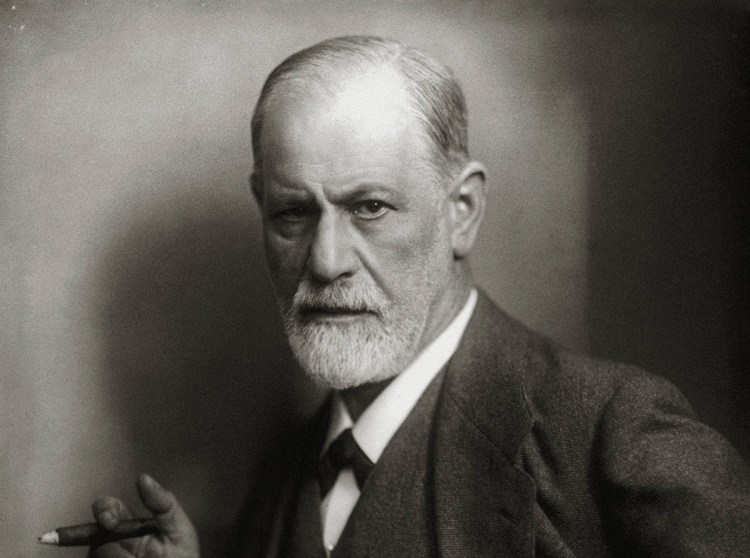
It is what psychoanalyst Freud calls the superego, the internalised ideals that we have acquired from institutions and society.
Sigmund Freud
It is based on a coherent set of rules established for the good of society. As Kant would say, “live your life as though your every act were to become a universal law.” However, the ethical still lacks a self-exploration, since one is to follow a set of socially accepted rules.
Immanuel Kant
Therefore, one can choose either to remain oblivious to all that goes on in the world, or to become involved with the world.
Kierkegaard did not try to convince the reader about picking one of them, but rather show that philosophy is about the human experience. Sometimes philosophy can get too abstract and lose its practicality. Kierkegaard brings philosophy down to the human level, and that’s where we’ve got to search for meaning.
📚The Book
As an Amazon Associate, I earn from qualifying purchases at no additional cost to you.
📺Watch The Full Video!🧠
Greatest Philosophers In History | Soren Kierkegaard
His concept of anxiety or angst is one of the most profound pre-Freudian works of psychology. His most popular work includes the leap of faith, the concept of angst, the three stages on life (aesthetic, ethical, religious) and the absurd, among others.
Søren Kierkegaard was a profound and prolific 19th century writer and philosopher in the Danish Golden Age of intellectual and artistic activity. Although he would argue that he wasn’t a philosopher since all he did was write about life, how we choose to live and what it means to be alive, centred in the individual or “existing being”. He is regarded as the father of Existentialism.
Existentialism is a philosophy that emphasises the existence of the individual and subjectivity. The core philosophy is the problem of existence. What is existence? Kierkegaard insisted that every individual should not only ask this question but should make his very life his own subjective answer to it. This stress on subjectivity is one of Kierkegaard’s main contributions.
Subjectivity
The idea of the subjective experience, the one thing we all probably have in common, has long been ignored by philosophers, it was left for simpletons. For almost two millennia, the philosophy of Plato and Aristotle reigned supreme. Kierkegaard helped build the foundations of Existentialist thought.
However, it wasn’t until a century after Kierkegaard’s death that Existentialism gained rapid popularity, with the emergence of French philosopher Jean Paul Sartre, examining the problems of existence, angst, and the absurd.
Jean Paul Sartre
In the realm of science, we’ve come a long way, a great progress has been undergone. However, in the individual realm, no progress has been or can be made. We all suffer and enjoy the same condition, the human condition, and have done so since time immemorial.
The individual sees the world he wills to see, and this depends upon the values he lives by, the ones that make him what he is. Kierkegaard argues that the values that make the individual what he is, also makes the world what it is.
Søren was the youngest of seven children, however, they all soon died, and he was left with his only sibling, Peter, who became a bishop. Søren had a slight physical handicap, often sickly and frail, yet highly gifted and his father’s favourite. It was his father’s second marriage, to a housemaid, that gave birth to Kierkegaard, when his father was 57 years old. It came within a year to his first wife’s death.
As a child, Søren was a strange kid among his peers. It is thought that he developed his sharp wit and quick thinking as a result of this, as well as with the guidance of his father. He could explore within himself many different forms of consciousness and ways of life, as he said:
“I go fishing for a thousand monsters in the depths of my own self.”
Kierkegaard’s father was a firmly religious and deeply melancholic man. When he was 11 years old, looking after sheep, numb with cold, hungry, and alone – he stood on a hillock and cursed God. He wasn’t able to forget this 71 years later. Kierkegaard’s father went on to become one of the richest merchants in Copenhagen and died at 82 years old, leaving a large sum of money to his son.
After the death of his father, Kierkegaard underwent a transformation of faith in the profoundest sense, to love god, which he considered to be the resolution of the fundamental misfortune of his being and the purpose of his existence.
Christianity
As a student in Copenhagen, he fell in love with Regine Olsen. However, at the age of 27, he still had no career. He contemplated two options: to marry Regine or to become a pastor, as his father had desired.
His hatred of the established church didn’t help him with becoming a pastor. Alternatively, he could develop the other side of himself, his strange personality, and special gifts, in which case he should remain an outsider and become a writer.
The meaning of Kierkegaard’s whole life hung under a decision and he now saw that choice is everything. He said:
“Life can only be understood backwards; but it must be lived forwards.”
He ended up breaking off his engagement to Regine Olsen, causing much pain and scandal. As a result, he had been ostracised by society. Kierkegaard had made up his mind to become a freelance writer living of money left him by his father. His starting point for his writing was inevitably himself, he had to understand and explain his own strange personality.
The public mockery and caricatures by the satirical magazine Corsair forced Kierkegaard into deeper isolation. But this only increased his determination to counterattack. To the public, his writings, with his huge cast of characters, seemed like a kind of theatre, just as the church seems to be concerned with Christianity.
The difference between the theatre and the church is essentially that the theatre honestly acknowledges itself to be what it is, while the church is a theatre which dishonestly tries in every way to hide what it is.
He wrote:
“A fire broke out backstage in a theatre. The clown came out to warn the public; they thought it was a joke and applauded. He repeated it; they applauded even more. I think that’s just how the world will come to an end: to the general applause of wits who believe it’s a joke.”
Sad clown
Kierkegaard wrote furiously all day and sometimes through the night as well. In 1843, he published nine books, containing the most detailed analysis of the possibilities of human existence yet done by anyone, using many pseudonyms, tricks, and other stratagems to deceive the reader into the truth. The purpose of all this was to make the reader come up with his own conclusion.
He explores different possibilities of human life, with the object of sharing that Christianity is the spiritual discipline that leads us to true selfhood, that tunes our individuality to the highest pitch. He’s interested in nothing but what he calls inwardness or subjectivity. Or as he says: “with the how, rather than with the what.”
Karl Marx, a contemporary of Kierkegaard’s, saw us cooperating with historical forces. The historical process itself becomes the sole redeemer and what the individual does is no longer important, it is all merely objective, rejecting life that starts from the individual person.
Karl Marx
Kierkegaard took the extreme opposite point of view. The leading edge of reality is nothing but our own personal decisions, the choices we make settle what we become, and what kind of world we’re going to find ourselves in. It is a philosophy action and will. Life’s chief task is to become an individual. And you can only become an individual by action and decision.
The divergence between Kierkegaard and Marx in the 1840s remains fundamental to us to this day.
He feared that in modern consumer society the individual was becoming absorbed into the crowd, a mere member of a herd. The spiritual life of the individual was being stifled by communal, political, and religious illusions. He says: “Any reformation which is not aware that fundamentally every single individual needs to be reformed is an illusion.”
All extraordinary men who had previously lived, had aimed at spreading Christianity, his task was to put a halt to a lying diffusion of Christianity. For him, Christianity which wants every man to be an individual has been transformed by human clumsiness into precisely the opposite.
He famously wrote in his diary: “My task is so new that in the 1800 years of Christianity there is literally no one from whom I can learn how to go about it.”
He hated the crowd and the social scene. When religion is integrated into society, the social scene becomes the religious scene.
Kierkegaard wanted to be an individual, but he couldn’t be an individual without being part of society. We define our meaning in life trying to come up with rational decisions, despite living in an irrational world.
Kierkegaard assigned the authorship of his books to invented authors, and he even made up the editors and compilers. So, you might have a book by Kierkegaard that begins “this was found at the bottom of a lake, by an editor who put it together”, and so on and so forth.
Kierkegaard’s hero was Socrates, who is understood through Plato since we don’t have any of his writings. For Kierkegaard, Socrates is an ironist, one who uses double meaning. He famously said: “I know that I know nothing”. He didn’t have any philosophical system, his whole life was a personal preoccupation with himself, he just asked questions, which led to his death sentence, and he ended up killing himself.
Kierkegaard some himself that way. The one thing Kierkegaard does not want to do, is to allow you to systematise him, systematising thought kills life. He saw that with Hegel, whom he wasn’t particularly fond of. Philosophy, for Kierkegaard, is not about understanding concepts, but rather about the human experience.
He uses pseudonyms as masks for personalities, his most famous being Johannes Climacus. They could be positions that he holds in some way, but his main point is to occupy all positions philosophically.
He would sometimes publish different books in a single day, and these books would comment on each other from completely contrasting perspectives. Thus, it becomes too difficult to ascertain which propositions Kierkegaard himself upholds.
📺Watch The Full Video!🧠
Greatest Philosophers In History | Soren Kierkegaard
His concept of anxiety or angst is one of the most profound pre-Freudian works of psychology. His most popular work includes the leap of faith, the concept of angst, the three stages on life (aesthetic, ethical, religious) and the absurd, among others.
Everyone carries a shadow, and the less it is embodied in the individual’s conscious life, the blacker and denser it is. At all counts, it forms an unconscious snag, thwarting our most well-meant intentions. – Carl Jung.
Exploring your shadow can lead to greater authenticity, creativity, energy, and personal awakening. This introspective process is essential for reaching maturity (which is rarer than most think).
So, what is the shadow? It can be described as the unknown dark side of the personality. The shadow forms part of a projection, you deny the existence of all the things you despise in yourself, while attributing them to others. So, whatever qualities we deny in ourselves, we see in others.
Unknown dark side of the personality
The shadow is a moral problem that challenges your ego, it affects you in the deepest roots of your personality. To become conscious of it, you must recognise the dark aspects of your personality as present and real.
For one does not become enlightened by imagining figures of light, but by making the darkness conscious, that is, by confronting the shadow.
To become a better version of yourself, getting closer to your true self, it is essential to integrate those elements of your psyche that have been repressed and have thus, formed your shadow.
These are all the elements that are considered immoral by society, even though they might be good for you. All we deny in ourselves, whatever we perceive as inferior, evil, or unacceptable, become part of the shadow. All the wrath, selfishness, greed, and envy within us produce resentment and repression, making our shadows bigger, darker, and stronger. To avoid this, we must develop virtues such as temperance, patience, gratitude, and humility.
Be humble
It is very possible that once we undergo the examination of our shadow, we are likely to discover how much hypocrisy, complacency, and fear many of the moral aspects we obey have, even those dictated by social norms.
With our past incidents and our current desires, it is only with considerable effort that we can detach ourselves from the shadow. If it comes to a neurosis, we invariably have to deal with a considerably intensified shadow. And if such a person wants to be cured it is necessary to find a way in which his conscious personality and his shadow can live together.
The shadow plays an important role in the overall psyche, and a weak adaptation can result in becoming a passive victim of your own shadow, constantly worried with what you think that other people think of you. You become a walking persona, putting a mask in social environments, concealing the true nature of yourself. This is especially true now in the era of social media, whereby we only display the pleasant parts and highlights of our lives. Thus, one could say that “the persona is that which in reality one is not, but which oneself as well as others think one is“.
As a consequence of acting with our fake self and repressing our real intentions, we remain obedient, and perhaps likeable, however, it is at the cost of our own mental stability and limiting our self-improvement and growth.
It must be you who integrates your shadow, and not the other way around. Otherwise you will become the slave of your autonomous shadow.
We not only repress the negative elements of our life, but we also repress the positive aspects: our honesty, creativity, competitiveness – these must be rescued from within our dark shadow.
How can we take back those virtues? Acting as a hero would act, mythologically speaking.
The hero is the one who conquers the dragon, and not the one who is devoured by it, only one who has risked the fight with the dragon and is not overcome by it, discovers the hidden treasure.
Be a Hero
He alone has a genuine claim to self-confidence, for he has faced the dark ground of his self and thereby has gained himself. Everything that menaced him from inside he has made his own, acquiring the right to believe that he will be able to overcome all future threats by the same means. He has arrived at an inner certainty which makes him capable of self-reliance.
Self-reliance is a key part of what Jung calls individuation or self-realisation, a lifelong process of distinguishing the self out of each individual’s conscious and unconscious elements, maximizing one’s human potential. This he believed to be the main goal of human psychological development.
Individuation
Imagine that you had a fairly hostile father who was not very well controlled in his aggression, decent person other than that. Your reaction is that “I am never going to be aggressive”, and you build a moral structure that’s part of your personality, stripping the idea of aggression of any ethical utility.
When Nietzsche said that Morality is cowardice, he meant that most of what people claim to be moral virtue is merely their fear to do anything that they would actually like to do, but that society would deem inappropriate.
It’s not that a person is good and doesn’t hurt someone, it’s that the person is afraid to hurt someone, and therefore doesn’t want to admit he is afraid, claiming that he is moral, masking his essential fear and cowardice in a guise of morality.
Being harmless and being moral is far from the same thing. This simplified version of morality stops you from tapping into the deeper parts of your psyche, by denying the worst in yourself, you prevent the possibility of the best.
For those who have weapons and the ability to use them, but determine to keep them sheathed, will inherit the world. Those who are capable of force but decide not to use it are in the proper moral position.
No one can achieve wholeness of personality without integrating their capacity of aggression. Jung’s idea of integrating the shadow, especially in the idea of evil, in part came from the experiences of what happened in Nazi Germany and during the Second World War.
What do you do with the part that’s aggressive and malevolent? You can’t just put it behind you, its existence must be admitted and brought into life, otherwise it will be lurking in the unconscious and, eventually, strike as an autonomous being when you least expect it.
Apart from psychotherapy and talking to friends or family about how they think you are, you must notice and contemplate your resentment and decide what you need to do to remove it. Radical honesty and genuine moral effort are good substitutes for psychotherapy.
Let’s say that you go to a party and you’re trying to impress the people that are there, you are trying to get them to like you. Maybe you get a little drunk and you laugh at some jokes, going along with everyone so that they like you, and then you go home. Now you are bitterly resentful about the way you were treated at this party, that’s going to make all sorts of regrets, aggressive and vengeful thoughts flash through your imagination.
The first part of the problem is that you were acting as your Persona, sacrificing yourself at the party so that people would like you. The second part is that you were refusing to admit to the existence of those elements of you that would have actually protected you from doing that.
Now you are home and you’re all bitter and resentful and you have fantasies of revenge. That reveals to you the shadow part of you that’s aggressive, present in every human being, but if you would have integrated the shadow more successfully into your personality, you wouldn’t have had to let people treat you differently to get them to like you.
Bitter and resentful
But most people have already adopted a morality that says:
“Well, I have to be likeable, and I shouldn’t do anything that causes any conflict, I shouldn’t ever hurt anybody’s feelings”.
There is no integration of the shadow in that situation.
Resentment is a good emotion for making contact with the shadow side, it reveals that you are either immature and you should stop whining and get on with things or that people really have been poking at you too much, so you have got things to say that you haven’t been willing to say or don’t know how to say.
And in order to stand up for yourself you must know when you can unsheathe your weapon, and let others know that you are willing to use it, this again might be something that violates your morality. However, when you are able to do this, you generally don’t have to, but they need to know that you can.
So, what would be a practical approach to integrating your shadow?
This practice is known as shadow work. Self-awareness, watching your emotional reactions, being radically honest and recording your dreams and discoveries are the main parts of shadow work.
An integrated person is not one who has simply eliminated the sense of guilt or the sense of anxiety from his life, who is fearless and wooden. He is a person who feels all these things but has no recriminations against himself for feeling them.
Integration of your shadow should be a lifelong process; this will help you get closer to self-realisation. Improving not only yourself, but also your relationship, your perception, your energy and physical health, your maturity, and your creativity.
“There is no light without shadow and no psychic wholeness without imperfection.”
In Nietzsche’s book Thus Spoke Zarathustra, there are three major teachings Zarathustra has to offer: the Will to Power, the conception of the Eternal Recurrence and the advocacy of the Overman.
The eternal recurrence is a central notion of Nietzsche’s thought. In Ecce Homo, he states:
“I now wish to relate the history of Zarathustra. The fundamental idea of the work, the Eternal Recurrence, the highest formula of a Yes-saying to life that can ever be attained, was first conceived in the month of August 1881. I made a note of the idea on a sheet of paper, with the postscript: “Six thousand feet beyond man and time.” – Ecce Homo, “Thus Spoke Zarathustra”
As Nietzsche was walking through the woods alongside a lake, he encountered a huge rock that towered aloft like a pyramid. It was here where the thought struck him.
The eternal recurrence supposes that you’d have to experience the same life, with the same events and same experiences, repeated for eternity. It makes its first appearance in The Gay Science, under the title “The greatest weight”, where Nietzsche raises the hypothetical question of how you would react if a demon spelled it out to you.
Nietzsche suggests that most people would consider this a curse and that it would require the most impassioned love of life:
to crave nothing more fervently than this ultimate eternal confirmation and seal
– The Gay Science, §341
The idea is horrifying and paralysing as it carries the burden of the “heaviest weight” imaginable. However, it is also the ultimate affirmation of life, it is the rock the fills the emptiness and weightlessness void of nihilism.
To comprehend and embrace it, requires amor fati, the love of fate and the acceptance and affirmation of the events of life.
The idea of the eternal recurrence does not suggest there to be an eternal afterlife, but rather an eternal repetition of what constitutes existence in the present world.
It is important to realise how frightful Nietzsche himself found the doctrine and how difficult it was for him to accept it. He wrote in a moment of despair:
“I do not want life again. How did I endure it? Creating. What makes me stand the sight of it? The vision of the overman who affirms life. I have tried to affirm it myself – alas!”
– Musarion ed., vol. XIV, p. 121.
His primary reaction is that no idea could be more gruesome. However, he discovers that there are moments in life that make this idea not only bearable but beautiful.
Sickness and convalescence is an important theme throughout Nietzsche’s writings, and reflects his personal fight with constant illness. He refers to the critical time in which out of sickness great health is born as “the highest time”, pain and pleasure are therefore closely tied together. He states:
“But what if pleasure and pain should be so closely connected that he who wants the greatest possible amount of the one must also have the greatest possible amount of the other, that he who wants to experience the ‘heavenly high jubilation’ must also be ready to be ‘sorrowful’ unto death?”
– The Gay Science, §12
This quote shows the harmony between opposing forces that Nietzsche has not only discovered or perceived in a theoretical way but has known how to experience first-hand as the most intense pain and the most effusive joy, reaching a feeling of joy worthy of gods.
The eternal recurrence is the denial of any absolute beginning, any creation, and any god. Thus, it breaks through the 2000 years of Christianity. It is a critique and repudiation of the Platonic-Christian tradition and accomplishes a revaluation of values. The timeless eternity of a supernatural God is replaced by the eternity of the ever creating and destroying powers in nature and man.
Nietzsche concentrates upon the dispute between the doctrine of becoming (attributed to Heraclitus) and the doctrine of being (attributed to Parmenides), as the most important event in the history of early Greek thought. Nietzsche was greatly influenced by Heraclitus’ idea of becoming, he states:
“Heraclitus will remain eternally right with his assertion that being is an empty fiction”
– Twilight of the Idols, “Reason” in Philosophy, 2.
The death of the Christian God made Nietzsche rediscover the Ancient World. He revived this classical idea.
Nietzsche finds in Heraclitus’ philosophy three elements which become leitmotifs in his teaching: life is eternal war, polarity, and tension; life is becoming and flux and life is play, “the world of Zeus.”. These elements become the bases for Nietzsche’s fundamental concepts of the will to power and the eternal recurrence.
The concept of the will to power is the foundation of Nietzsche’s theory of eternal recurrence and the basis of his metaphysics.
Nietzsche is often called a philosopher of life. Heidegger calls his belief a metaphysics of being. And he is quite right in stating that Nietzsche is a metaphysician, and the eternal recurrence “a doctrine where being is thought in its deepest sense.” Wherever Nietzsche rejects metaphysics, it is only the Platonic-Christian tradition that he opposes in which being is understood as unchanging and transcendent. Therefore, Nietzsche only rejects metaphysics of a fixed and static world. Just as Nietzsche, the “immoralist”, is in reality a seeker of moral values beyond good and evil.
The will to power is a dynamic force in continuous becoming and striving, manifesting itself in the encounter with obstacles. Nietzsche’s will to power is different from Darwin’s principle of the “survival of the fittest”. Nietzsche’s “survival” is not merely struggle for existence and self-preservation, but it is primarily struggle for increase of power, while the fittest is the higher individual, the “free spirit” is one who affirms struggle as a creative force and aims at intensification of power.
The two basic concepts of the will to power and the eternal recurrence seem at first to contradict each other: the will to power symbolising an eternal development and the eternal recurrence an eternal sameness.
Nietzsche himself sees no contradiction. He calls becoming a “form of Being”, thus they are compatible. This is best expressed in Heraclitus’ famous quote which symbolises becoming and constant flux:
“No man ever steps in the same river twice”
The river is not only a symbol of becoming, but the sameness and repetition of the motion is a form of Being. In fact, Nietzsche claims:
“the eternal recurrence … this teaching of Zarathustra, might have already been taught by Heraclitus”
– Nachlass, Werke, XV, p.68.
And finally, life is play. Nietzsche calls the cosmos “the Innocence of Becoming”. The world is an eternal play of dynamic forces, their tension and release, their perishing and coming to be. It is an eternal recurrence of a will to create and to destroy, to struggle and to expand.
In Thus Spoke Zarathustra, the eternal recurrence is Zarathustra’s “abysmal thought” and central teaching. It is both creation and destruction, joy and suffering, good and evil.
However, if everything eternally recurs, this includes the “most contemptible” Last Man, which is diametrically opposite to the Overman. Zarathustra is full of anguish as he placed his hopes for mankind in a dramatic historical moment, the bridge from man to the overman:
“Alas, man recurs eternally! The little man recurs eternally! I had seen them both naked, the greatest man and the smallest man: all too similar to one another, even the greatest all too human! The greatest all too small! – that was my disgust at man! And eternal recurrence even for the smallest! That was my disgust at all existence!”
– Thus Spoke Zarathustra, The Convalescent, 2.
Zarathustra is so sickened by this thought that he remained lying down for seven days and for a long time would neither eat nor drink. However, his animals kept him company. While still convalescent, his animals speak to him:
“Everything goes, everything returns, the wheel of existence rolls for ever. Everything dies, everything blossoms anew; the year of existence runs on for ever. Everything breaks, everything is joined anew; the same house of existence builds itself for ever. Everything departs, everything meets again; the ring of existence is true to itself for ever. Existence begins in every instant, the ball There rolls around every Here. The middle is everywhere. The path of eternity is crooked.”
– Thus Spoke Zarathustra, The Convalescent, 2
They elaborate further stating:
“For your animals well know, O Zarathustra, who you are and must become: behold, you are the teacher of the eternal recurrence, that is now your destiny! That you have to be the first to teach this doctrine – how should this great destiny not also be your greatest danger and sickness! Behold, we know what you teach: that all things recur eternally and we ourselves with them, and that we have already existed an infinite number of times before and all things with us. You teach that there is a great year of becoming, a colossus of a year: this year must, like an hour-glass, turn itself over again and again, so that it may run down and run out anew […] And if you should die now, O Zarathustra: behold, we know too what you would then say to yourself – but your animals ask you not to die yet! You would say – and without trembling, but rather grasping for happiness: for a great weight and oppression would have been lifted from you, most patient of men! “Now I die and decay,” you would say, and in an instant I shall be nothingness. Souls are as mortal as bodies. But the complex of causes in which I am entangled will recur – it will create me again! I myself am part of these causes of the eternal recurrence. I shall return, with this sun, with this earth, with this eagle, with the serpent – not to a new life or a better life or a similar life: “I shall return eternally to this identical and self-same life in the greatest things and in the smallest, to teach once more the eternal recurrence of all things. To speak once more the teaching of the great noontide of earth and man, to tell man of the Overman once more.”
– Thus Spoke Zarathustra, The Convalescent, 2
After Zarathustra’s recovery, he struggles with the “spirit of gravity”, which sees life as a burden to be borne and is represented by a dwarf. It is Zarathustra’s own reflective doubt that he will be “dragged down” by the thought of the eternal recurrence.
“Behold this gateway, dwarf! It has two aspects. Two paths come together here: no one has ever reached their end. This long lane behind us: it goes on for an eternity. And that long lane ahead of us – that is another eternity. They are in opposition to one another […] and it is here at this gateway that they come together. The name of the gateway is written above it: “Moment”. But if one were to follow them further and ever further and further: do you think, dwarf, that these paths would be in eternal opposition? […]
From this gateway Moment a long, eternal lane runs back: an eternity lies behind us. Must not all things that can run have already run along this lane? Must not all things that can happen have already happened, been done, run past? And if all things have been here before: what do you think of this moment, dwarf? Must not this gateway, too, have been here – before? And are not all things bound fast together in such a way that this moment draws after it all future things? Therefore – draws itself too? For all things that can run must also run once again forward along this long lane […] must we not all have been here before? And must we not return and run down that other lane out before us, down that long, terrible lane – must we not return eternally? […]”
Thus Spoke Zarathustra, Of The Vision and the Riddle, 2
In reading Thus Spoke Zarathustra, we are experiencing as readers our own eternal return, the cycle of hope and despair, descent and return, sociality and isolation, love and contempt, parable and parody, lower and higher, earth and heaven, snake and eagle, that are present throughout the book.
In the climax of the book, Zarathustra stands up and accepts the eternal recurrence: he becomes the ultimate life affirmer and Yes-sayer. He dedicates to the higher man, who aspire to the figure of the overman, his dithyramb on all Eternity. Zarathustra’s soul and Dionysus both represent the highest kind of being.
“I, the last disciple of the philosopher Dionysus – I, the teacher of the eternal recurrence.”
Twilight of the Idols, What I owe to the Ancients, 5
The Eternal Recurrence | Friedrich Nietzsche
The eternal recurrence is a central notion of Nietzsche’s thought. It supposes that you’d have to experience the same life, with the same events and same experiences, repeated for eternity.
In Nietzsche’s book Thus Spoke Zarathustra, there are three major teachings Zarathustra has to offer: the Will to Power, the conception of the Eternal Recurrenceand the advocacy of the Overman.
In this post we will explore the meaning behind the will to power.
Introduction
The will to power is one of the most fundamental concepts in the philosophy of Friedrich Nietzsche. It is also one of his most complex concepts as it was never systematically defined in his works, leaving its interpretation open to debate. Nietzsche had considered writing a book under the title “The Will to Power” which he announced in the Genealogy of Morals published in 1887:
“These things will be addressed by me more fully and seriously in another connection (with the title “On the History of European Nihilism”; for which I refer you to a work I am writing, The Will to Power, Attempt at a Revaluation of all Values).”
Genealogy of Morals, Third Essay, §27
However, in 1888, Nietzsche had abandoned the entire project of The Will to Power and decided to write a new four-part magnum opus with his notes gathered in the abandoned project, under the title “Revaluation of All Values” and actually finished the first quarter: The Antichrist. Unfortunately he could not complete this monumental task as he experienced a mental breakdown in 1889, with a complete loss of his mental faculties for the remaining 11 years of his life.
During this time, Nietzsche’s sister Elisabeth and his friend Peter Gast took possession of all his unpublished notes and edited them to publish The Will to Power, Elisabeth claimed that this text was her brother’s magnum opus. Sadly, she wanted to use it to pursue her personal agenda in National Socialism.
This work has since then been superseded by an expanded second version containing 1067 sections, which includes Nietzsche’s original notes. This is what has come to be commonly known as The Will to Power. Although, it remains a posthumously published work, rather than a text completed by him, it is still an excellent anthology of selections from his notebooks.
We will be focusing on what Nietzsche actually wrote and published himself during his active years, as well as making some references to his unpublished notes where it is appropriate.
Desire for Power: A Psychological Insight
Nietzsche’s early works “Human, All Too Human (1878)”, “The Dawn (1881)” and “The Gay Science (1882)”, provide his first psychological insights on the “desire for power”. He writes:
“The reason why a powerful person is grateful is this: his benefactor has […] intruded into [his] sphere […] It is a milder form of revenge. Without the satisfaction of gratitude, the powerful man would have shown himself powerless and would hence be considered so. Therefore every society of the good, i.e., originally of the powerful, places gratitude amongst the first duties.”
Human, All Too Human, §44
Nietzsche explains that if somebody does something for you, there is an implication that you were powerless and needed his help. You are degraded in his eyes and in your own. Then you thank him, and the implication is reversed: he has done something for you, as if you were the powerful one and he your servant. In that sense, gratitude may be considered a mild form of revenge.
In another aphorism, Nietzsche observes the effort of people to arouse pity:
“[…] ask yourself whether that ready complaining and whimpering, that making a show of misfortune, does not, at bottom, aim at making the spectators miserable; the pity which the spectators then exhibit is in so far a consolation for the weak and suffering in that the latter recognise therein that they possess still one power, in spite of their weakness, the power of giving pain.”
Human, All Too Human, §50
As we can observe, the early Nietzsche does not find this desire for power admirable – more often than not, he used it to explain behaviour he happened to dislike.
This would later change with his Genealogy of Morals, which Human, All-Too-Human laid the seeds for. He explains that the desire for power exists both among the powerful – whose high esteem of gratitude Nietzsche would explain thus – and among the impotent, whose desire for pity Nietzsche construes as prompted by a desire for power.
Here we stumble upon a crucial point: that an apparent negation of the desire for power is explained in terms of the desire for power. Even asceticism, humility, self-abasement and renunciation of worldly power are motivated by this way. He writes:
“Indeed, happiness – taken as the most alive feeling of power – has perhaps nowhere on earth been greater than in the souls of superstitious ascetics.”
The Dawn, §113
In another aphorism, he states:
“Power which has greatly suffered both in deed and in thought is better than powerlessness which only meets with kind treatment—such was the Greek way of thinking. In other words, the feeling of power was prized more highly by them than any mere utility or fair renown.”
The Dawn, §360
The powerful have no need to prove their might either to themselves or to others by oppressing or hurting others, only the weak man wishes to hurt and to see the signs of suffering. This sudden association of power to the Greeks was a decisive step in the development of this conception into an all-embracing monism, as “will to power”.
With these insights, the possibility of a psychological monism suggests itself: all psychological phenomena might be reducible to the will to power. Nietzsche, however, is not primarily in search of any basic principle, he does not jump to this conclusion – yet.
The Origin of the “Will to Power”
In 1883, the concept of the will to power came like a flash of lightning, and in a frenzied feeling of inspiration, Nietzsche wrote Thus Spoke Zarathustra, where the will to power makes its first appearance. It is introduced as one of the three major teachings Zarathustra has to offer, the other two being the Ubermensch and the Eternal Recurrence.
He writes:
“Only where there is life, there is also will: not will to life but […] will to power. There is much that life esteems more highly than life itself; but out of the esteeming itself speaks the will to power. Thus life taught me.”
Thus Spoke Zarathustra, Part 2, On Self Overcoming.
Nietzsche was fundamentally concerned with commanding or exercising power over oneself, not over others. The will to power is a dynamic force in continuous becoming and striving, manifesting itself in the encounter with obstacles. It is the expression of self-realisation, becoming who you truly are.
Zarathustra embodies the struggle of the will to power, as obstacles inevitably give way to resistances. He is completely uninterested in gaining power over others, as he states: “I lack the lion’s voice for all commanding”. In fact, he keeps insisting that the last thing he wants is the ability to command his disciples, but rather that they follow themselves.
Nietzsche summarises the will to power most succinctly in The Antichrist:
“What is good? All that heightens the feeling of power, the will to power, power itself in man. What is bad? All that proceeds from weakness. What is happiness? The feeling that power increases — that a resistance is overcome.”
The Antichrist, §2
Will to Power and Self-overcoming
The secret that Zarathustra has learned from life is self-overcoming, the characteristic of the Ubermensch. As we have seen, the key problem is self-commanding. However, it is not as easy as it sounds. In fact, many people embody what Nietzsche calls the “Last Man”, the antithesis of the Ubermensch, those who are all alike and follow others – a herd mentality – too afraid to do anything extreme and remain in mediocrity all their lives. They do not take risks because of fear or laziness.
However, Nietzsche does not write for them, but for that small percentage of people who want true fulfilment and happiness out of life. The only way to achieve the highest level of happiness is to take risks.
“For believe me! — the secret for harvesting from existence the greatest fruitfulness and the greatest enjoyment is: to live dangerously!”
The Gay Science, §283
There’s almost a zero percent chance that you won’t experience some form of extreme pain in your life. Nietzsche tells us to not run from this reality, but to face it and overcome it, in order to grow.
Think of the metaphor of climbing a mountain, there are obstacles and difficulties ahead, one can even risk falling from the heights and injuring or killing oneself. However, once you reach the top of the mountain, you’ll be able to see the most beautiful views imaginable.
“He who climbs upon the highest mountains laughs at all tragedies, real or imaginary.”
Thus Spoke Zarathustra, Part I, On Reading and Writing
Those who do not overcome their obstacles, will miss the most amazing moments of life and live mediocre lives.
Will to Power and Sublimation
Nietzsche’s concept of sublimation is key to understanding the will to power. He believed that a sexual impulse, for example, could find satisfaction in the attainment of something else, such as creative spiritual activity, instead of being fulfilled directly.
One of his main critics of Christianity is that it did not sublimate the instincts but rather repudiated them. As the instincts are what makes us human beings, it is against life itself – contrary to the will to power, in which instincts are the main drive force in humans.
This contrast of the abnegation, repudiation, and extirpation of the passions on the one side, and their control and sublimation on the other, is one of the most important points in Nietzsche’s entire philosophy.
The man who can develop his faculty of reason only by extirpating his sensuality has a weak spirit; a strong spirit need not make war on the impulses: it masters them fully and is—to Nietzsche’s mind—the acme of human power.
He points out that most of the great philosophers were not married and explains the matter as follows:
“As for the “chastity” of philosophers, finally, this type of spirit clearly has its fruitfulness somewhere else than in children; perhaps it also has the survival of its name elsewhere, its little immortality”
Genealogy of Morals, Third Essay, §8
And in his notes, he writes:
“Making music is another way of making children”
Will to Power, §800
Will to Power as Dualistic
The will to power as the only interpretation also supposes its opposite, namely, decadence. Decay must be explicable from the striving for growth, just as weakness must be comprehensible in terms of the principle of strength. He writes:
“But what if pleasure and pain should be so closely connected that he who wants the greatest possible amount of the one must also have the greatest possible amount of the other, that he who wants to experience the ‘heavenly high jubilation’ must also be ready to be ‘sorrowful’ unto death?”
The Gay Science, §12
Human beings do not seek pleasure and avoid displeasure, they seek an increase of power which is confronted by displeasure as an obstacle to their will to power. It is therefore natural for human beings to have a continual need for displeasure in order to grow.
Will to Power vs Will to Existence (Nietzsche contra Darwin)
The will to power opposes the prevalent notion of the “will to existence”. He writes:
“Indeed, the one who shot at truth with the words ‘will to existence’ did not hit it: this will – does not exist! For, what is not can not will; but what is in existence, how could this still will to exist! Only where life is, is there also will; but not will to life, instead – thus I teach you – will to power!”
Part 2. On Self Overcoming. Thus Spoke Zarathustra.
In Twilight of the Idols, Nietzsche considered himself an Anti-Darwin. Darwin proposed that we evolved through natural selection whereby one’s ability to survive will leave the most copies of itself in successive generations.
Herbert Spencer, a follower of Darwin, coined the well-known phrase “survival of the fittest”, however unlike Darwin, he believed that all living beings seek first and foremost self-preservation. Darwin does not propose self-preservation, but rather that behaviours that are advantageous are the ones preserved in natural selection.
Thus, Nietzsche misattributes self-preservation to Darwin.
In The Gay Science, Nietzsche writes:
“To will to preserve oneself is the expression of distress, of a limitation of the genuinely basic drive of life which aims at the expansion of power and in this willing frequently risks and even sacrifices self-preservation […] The struggle for existence is only an exception, a temporary restriction of the life-will; the great and small struggle always turns upon superiority, upon growth and expansion, upon power, in accordance with the will to power, which is just the will of life”
The Gay Science, §349
What is clear is that Nietzsche’s survival is not merely self-preservation, but is primarily struggle for increase of power. Everything strives for power, for the most, unconsciously.
Beyond Good and Evil has the most references to the “will to power” in his published works, appearing in 11 aphorisms. Nietzsche reiterates that life is not self-preservation:
“Physiologists should think before putting down the instinct of self-preservation as the cardinal instinct of an organic being. A living thing seeks above all to discharge its strength – life itself is will to power; self-preservation is only one of the indirect and most frequent results.”
Beyond Good and Evil, §13
Furthermore, in his notes, he writes:
“It can be shown most clearly for every living thing, that it does everything, not in order to preserve itself, but to become more.”
Will To Power, §688
Just as a tree will naturally seek to grow its roots and gain resources, so will a person seek to develop his health, wealth, strength and status – which are all expressions of his will to power.
Will to Power vs Will to Live (Nietzsche contra Schopenhauer)
Schopenhauer had written long before Darwin about his concept of the “will to live”. Nietzsche had read Schopenhauer extensively in his youth and he became a sort of father figure for him, although he later grew apart from his philosophy. As he would say:
“One repays a teacher badly if one always remains nothing but a pupil”
Thus Spoke Zarathustra, Part I, “On Bestowing Virtue”
Nietzsche rejected the “will to live” in favour of his “will to power”. Schopenhauer’s Will is a metaphysical concept inspired by his readings of Kant’s noumenon or the unknowable “thing in itself”, which exists independently of human sense and perception – it is the opposite of phenomenon, which refers to any object of the senses, such as sight and sounds.
For Schopenhauer, the Will is the cause of all suffering, as human life is a ceaseless struggle for satisfaction. We are constantly pursuing objects of desire to become happy, but when we achieve them, we do not become satisfied – it merely liberates us from our previous pain. We remain in a constant state of suffering and restlessness, until we inevitably die. Thus the pessimism of his philosophy.
Nevertheless, he does believe that we can achieve momentary bliss and peace of mind whereby the Will ceases its desire of striving. This comes from aesthetic experiences, such as music and art.
However, the only way we can free ourselves from our miserable existence is through the total negation of the Will and lead an ascetic life , in order to minimise suffering.
Nietzsche, as we have seen, embraces suffering, as it is precisely what helps us grow in life. Pain is necessary and not to be devalued. Since obstacles cause pain, we must overcome them so that we can advance our power. As he says in one of his most popular phrases:
“What doesn’t kill you makes you stronger.”
Twilight of the Idols, Maxims and Arrows, §8.
Will to Power vs Will to Truth (Nietzsche contra Philosophers)
As an experimental philosopher, Nietzsche sought to break with the delusion of the metaphysicians who believed that they could solve all of life’s riddles with one stroke, with one word, and become “unriddlers of the universe”. He claims that philosophers’ “will to truth” (i.e., their apparent desire to dispassionately seek objective, absolute truth) is actually nothing more than a manifestation of their will to power.
“Will to truth – you call that which drives you and makes you lustful, you wisest ones? Will to thinkability of all being, that’s what I call your will! You first want to make all being thinkable, because you doubt, with proper suspicion, whether it is even thinkable. But for you it shall behave and bend! Thus your will wants it. It shall become smooth and subservient to the spirit, as its mirror and reflection. That is your entire will, you wisest ones, as a will to power; and even when you speak of good and evil and of valuations. You still want to create the world before which you could kneel: this is your ultimate hope and intoxication.”
Part 2. On Self Overcoming. Thus Spoke Zarathustra.
Will to Power and Metaphysics
In Beyond Good and Evil, Nietzsche tells us to suppose that we succeeded in explaining our entire instinctive life as the development and ramification of one basic form of the will, which includes everything from procreation to nourishment, if so:
“The world seen from within […] it would simply be “will to power” and nothing else.”
Beyond Good and Evil, §36
Some interpreters have emphasised this view of the will to power as a metaphysical general force underlying all reality, making it more directly analogous to Schopenhauer’s will to live. This brings some confusion as Nietzsche is against metaphysics.
Many Nietzschean scholars have insisted that the will to power is less metaphysical and more pragmatic than Schopenhauer’s, while Schopenhauer thought the will to live was what was most real in the universe, Nietzsche’s will to power can be understood primarily as the key concept of a psychological hypothesis, as well as a useful principle for the purpose of the individual’s life.
However, we cannot deny that Nietzsche views it more and more as a basic force of the entire universe in his later life. What can we make of this contradiction?
Martin Heidegger’s work continues to have an enormous influence on how Nietzsche’s notion of the will to power is interpreted – as a traditional metaphysical unity. However, there is a crucial distinction to be made in terms of metaphysics. Wherever Nietzsche rejects metaphysics it is only the Platonic-Christian tradition in which “Being” is understood as fixed and static, such as Plato’s world of forms or the Christian concept of heaven.
Nietzsche’s will to power symbolises an eternal Becoming, thus it does not possess a substantial, durable character. It is a monism in which even being is conceived as becoming. Being is thus not opposed to becoming, but rather becoming includes being. Keeping this in mind, it is possible to talk about the metaphysics of the will to power.
A crucial point must be made in Nietzsche’s concept of power, it is characterised by intrinsic relationality: power is only power in relation to another power. In other words, there are no first things, which then have relations with each other; rather, things are what they are by virtue of their relations.
Nietzsche’s concept of power implies that reality is dynamic – there is no fixed cause that can be separated from that causation. This structure implies that power must be understood as a necessary striving for more power. Power is a necessary striving to expand itself and is only power insofar as it can maintain itself against other powers and strives to predominate over them.
However, speaking about “a will to power” is misleading, for all reality is will to power. It is not an independent unity, it is always a variable and relational multiplicity held together, and those wills to power exist only as a multiplicity of wills to power, and so on ad infinitum. It is always at war with itself.
It is a single basic force whose very essence it is to manifest itself in diverse ways and to create multiplicity— not ex nihilo, but out of itself.
In Nietzsche’s worldview nothing has existence and meaning outside the “game” of power relations. Because of this, there is no withdrawal from this “game”.
This chaos is not a mere burden that we have to overcome to survive or make our life easier, it also plays a very positive role. It is the basis of all creation and creativity, without it nothing novel could emerge.
“One must still have chaos in oneself to be able to give birth to a dancing star.”
To conclude – Nietzsche’s conception of the will to power is not primarily a metaphysical principle. His central concern is with man, and power is to him above all a state of the human being. The projection of the will to power from the human sphere to the cosmos is an afterthought.
Wealth and military might were never signs of great power to Nietzsche’s mind; and he realised fully that power involves self-discipline and self-overcoming, this is, in fact, the central point of the will to power.
📺Watch The Full Video!
NIETZSCHE: The Will to Power
The will to power is one of the most fundamental concepts in the philosophy of Friedrich Nietzsche. It is also one of his most complex concepts as it was never systematically defined in his works, leaving its interpretation open to debate.
In Nietzsche’s book Thus Spoke Zarathustra, he presents three stages in life for self-overcoming: the camel, the lion, and the child.
1. The Camel
The spirit first becomes a camel, but not everybody can become a camel. There are many heavy things for the spirit, things that weigh upon us (our vanity, the satisfaction of our appetite, being the centre of attention). A camel requires us to be greater than ourselves, and that requires some sacrifice – the strength longs for the heavy.
“What is heavy? thus asks the weight-bearing spirit, thus it kneels down like the camel and wants to be well laden. What is the heaviest thing, you heroes? […] Is it not this: to debase yourself in order to injure your pride? To let your folly shine out in order to mock your wisdom?”
(Nietzsche, First Part, The Three Metamorphoses)
Nietzsche suggests that when we feel proud of ourselves, we are to take on even more weight to show that we are not that great after all. In other words, to humble ourselves.
The weight bearing spirit takes on these heaviest things like a camel hurrying laden into the desert. Here is where we undergo a new transformation, we become the lion.
2. The Lion
Now that those burdens are gone, the lion wants to take on freedom, but it is confronted by the mightiest of dragons, on every scale of which is a rule, every “Thou shalt” compiled since the beginning of time – the lion must fight back and oppose the dragon, saying I Will – uttering the “sacred No”. However, the lion lives in rebellion – it has yet to undergo a final and last transformation – becoming the child.
3. The Child
Nietzsche states that:
“The child is innocence and forgetfulness, a new beginning, a game, a self-propelling wheel, a first motion, a sacred Yes.”
(Nietzsche, First Part, The Three Metamorphoses)
Having uttered the “sacred No” to reject everything that came before, the child shouts the “sacred Yes” that affirms life. The loss of shame, compassion and child-like spirit will be the step that leads to freedom, by doing that it wins its own world, with no burdens or no’s, he can create his own values, and not to be left with superfluous pleasures that hinder a full enjoyment of the existence.
📺Watch The Full Video!🧠
Greatest Philosophers In History | Friedrich Nietzsche
Nietzsche’s main concepts on living life revolve around self-overcoming, amor fati, perspectivism, human nobility, the will to power, the eternal recurrence, and the overman.
Perhaps one of Nietzsche’s most famous statements is his proclamation of the death of god:
“God is dead. God remains dead. And we have killed him. How shall we comfort ourselves, the murderers of all murderers? What was holiest and mightiest of all that the world has yet owned has bled to death under our knives: who will wipe this blood off us? What water is there for us to clean ourselves? What festivals of atonement, what sacred games shall we have to invent? Is not the greatness of this deed too great for us? Must we ourselves not become gods simply to appear worthy of it?”
As you might tell, it doesn’t sound very much like a celebratory statement. Although Nietzsche was concerned on ending all the values that have been compiled for millennia from all kinds of civilizations and that are rooted within society, he did believe it to be necessary and possible.
He calls this process of transcending our existing values as a Revaluation of All Values. Proposing that a revaluation of values that runs deeply enough can eventually lead the entire human race into a new pattern of life beyond the human, a figure which he calls the Übermensch or Overman.
By proclaiming the death of god, Nietzsche looked upon a historical event where god, who played a central role in most people’s lives for many centuries has now become one of many facets of some people’s lives. There are still believers and churches, but god no longer defines the role of our world, it is for this reason that god is dead.
Church stained glass
Nietzsche states Christianity to be fundamentally rooted in a “slave morality” and he criticises the masses, for this suicide of reason, this worm-like reason.
The slave morality resents the virtues of the powerful. However, Nietzsche perceives evil as something powerful and dangerous, it is felt to contain a certain awesome quality, a subtlety and strength that block any incipient contempt. According to the slave morality then, “evil” inspires fear; but according to the “master morality”, it is “good” that wants to inspire fear.
The sacrifice of all freedom, pride and self confidence in the spirit leads to enslavement. The master morality does not intend to oppress others, but rather create new values and ways of life. A slave morality sees virtue from refraining to exercise one’s power and sees evil in doing so.
He argues that Christianity is derived from subservience, obedience and being a member of a flock. It is a way of hating life and wanting to escape life into a heavenly and eternal afterlife.
Christianity
However, the less our reality is dumbed down, sweetened up and veiled over, the closer to the “truth” we are.
For as long as there have been people, there have been a very large number of people who obey compared to relatively few who command. Considering that humanity has been a breeding ground for the cultivation of obedience, the average person has a need to obey, a “thou shalt”.
A herd instinct of obedience, taken to extremes, will signify that in the end, there will be nobody with independence or the ability to command. A high, independent spiritedness, a will to stand alone, even an excellent faculty of reason, will be perceived as a threat. Everything that raises the individual over the herd and frightens the neighbour will henceforth be called evil.
Herd
Thus, Nietzsche sees Christianity as something inferior to man, something to grow out of, away from and above. It is the deterioration of the human race. To twist every instinct of the highest type of man into uncertainty, self-destruction and invert the whole love of the earth into hatred against the earthly. The most disastrous form of arrogance, who have given way to a herd animal, a mediocre breed.
📺Watch The Full Video!🧠
Greatest Philosophers In History | Friedrich Nietzsche
Nietzsche’s main concepts on living life revolve around self-overcoming, amor fati, perspectivism, human nobility, the will to power, the eternal recurrence, and the overman.
Nietzsche speaks of the idea of vornehmheit or human nobility. That it is not within knowledge per se. Knowledge is not something one can have like a detached thing that one possesses, but rather the knowing subject has to live his knowledge, it becomes associated to how much truth one can endure.
The nobility in human beings resides in putting oneself at a distance from people and things: to have a sense of differences in rank between people and strive for higher distinction.
He speaks of “the pathos of distance”, which refers to a differentiation between the ordinary and the noble types of man, a chasm separating the great from the mediocre. Nietzsche is concerned with issues of not just individual decadence, but also of cultural decadence. He is concerned with life-affirming great individuals, not merely for their own sake, but for the rejuvenation and flourishing of culture.
However, Nietzsche does not intend to elevate all of humanity. His intent is to elevate those who can be elevated. He is fine with the herd staying the herd, but he wishes to seduce people away from the herd and expects the herd to hate him.
The Herd
What most interested Nietzsche throughout his entire intellectual career can be summarised in the form of the question “how are we to live?”, or more poignantly “how are we to endure life?”
He conceives life as a chaotic process without any stability or direction. And that we have no reason to believe in such a thing as value of life, insofar as these terms imply the idea of an objective purpose of life.
Human life is value oriented in its very essence, without adherence to some set of values or other, human life would be virtually impossible. So, if there are no values out there and we cannot live without values, then there must be some value-creating capacity within ourselves which is responsible for the values we cherish, and which organise our lives.
The noble and brave types creates values. He honours everything he sees in himself: this sort of morality is self-glorifying. A faith in yourself, a pride in yourself and a fundamental hostility and irony with respect to selflessness belong to a noble morality.
Nietzsche stated that the modern man would have to create his own values and morals in a world void of religion and belief, while avoiding the risk of falling into nihilism, the belief that life is meaningless, devoid of any value structure.
📺Watch The Full Video!🧠
Greatest Philosophers In History | Friedrich Nietzsche
Nietzsche’s main concepts on living life revolve around self-overcoming, amor fati, perspectivism, human nobility, the will to power, the eternal recurrence, and the overman.
Nietzsche’s doctrine of perspectivism claims that our view of the world and the statements we take to be true, depend on our perspective of the world. Thus, it gives rise to the epistemological thesis that our knowledge claims can never be true in an absolute or objective sense.
Perspectivism lays the foundations of Nietzsche’s thought, philosophy is subjective, and no philosophy is ultimate – but helps as a base to allow others to see the world differently.
Nietzsche did have an influence on postmodernist philosophers, especially with his critique of morality (genealogy of morals), the death of god, etc. However, he was certainly not a postmodernist himself, he was beyond that, as he tried to create objective values to live by that can advance humanity (postmodernism rejects objective values). His will to power is an affirmation of life that enhances it and creates objective values. He is thus a philosopher of the future, beyond postmodernism.
He speaks of a new breed of philosophers approaching, of “free spirits¨. These are not ones who want to establish their truth as a truth for everyone (the secret wish of all dogmatic aspirations), they are outlaws, who are not in agreement with the majority, and whose judgments are their judgments alone. Inevitably they will be presented with bolted doors and shut windows, but for Nietzsche, these are free, very free spirits.
“Greatest of all is the one who can be the most solitary, the most hidden, the most different, the person beyond good and evil, the master of his virtues, the one with an abundance of will. Only this should be called greatness: the ability to be just as multiple as whole, just as wide as full.”
📺Watch The Full Video!🧠
Greatest Philosophers In History | Friedrich Nietzsche
Nietzsche’s main concepts on living life revolve around self-overcoming, amor fati, perspectivism, human nobility, the will to power, the eternal recurrence, and the overman.
Friedrich Nietzsche was a German philosopher of the 19th century, one of the most revolutionary thinkers in Western philosophy and intellectual history. He was a cultural critic of his era, of traditional European morality and religious fundamentalism, especially of Christianity.
Nietzsche heavily emphasised the concept of selbstüberwindung or self-overcoming. By this, he means the act of expressing strong emotions or using energy by doing an activity or creating something.
Self-overcoming
We must face reality, and suffering is part of life. It is not to be eliminated, it is to be overcome, leading to growth. We make everything around us so easy, superficial, and bright, unable to face reality. Is this truly freedom? For Nietzsche, this is a simplified and falsified world. So, to delight in life itself, we must confront it at face value – everything evil, terrible, and snakelike in humanity serves just as well as its opposite to enhance the species “humanity”. We are to be grateful for even difficulties.
It is clear that pain is an inevitable part of human existence. From birth till death – there is a 100% chance that we will suffer significantly painful experiences. But people run from the pain, they spend their life trying to be comfortable. Instead of running from it, Nietzsche would want us to face the hardship, as it is the only way we grow as people.
“What does not kill me, makes me stronger.”
Imagine climbing up a mountain. There is struggle, pain, and hardship along the way. But it’s only from the top of the mountain that you can see the most beautiful views life has to offer. And it is only the people that have the courage to climb that mountain, that will ever get to see that view.
Mountain view
📺Watch The Full Video!🧠
Greatest Philosophers In History | Friedrich Nietzsche
Nietzsche’s main concepts on living life revolve around self-overcoming, amor fati, perspectivism, human nobility, the will to power, the eternal recurrence, and the overman.